What Is the Cloud Computing Reference Architecture?
Introduction to Cloud Computing Reference Architecture
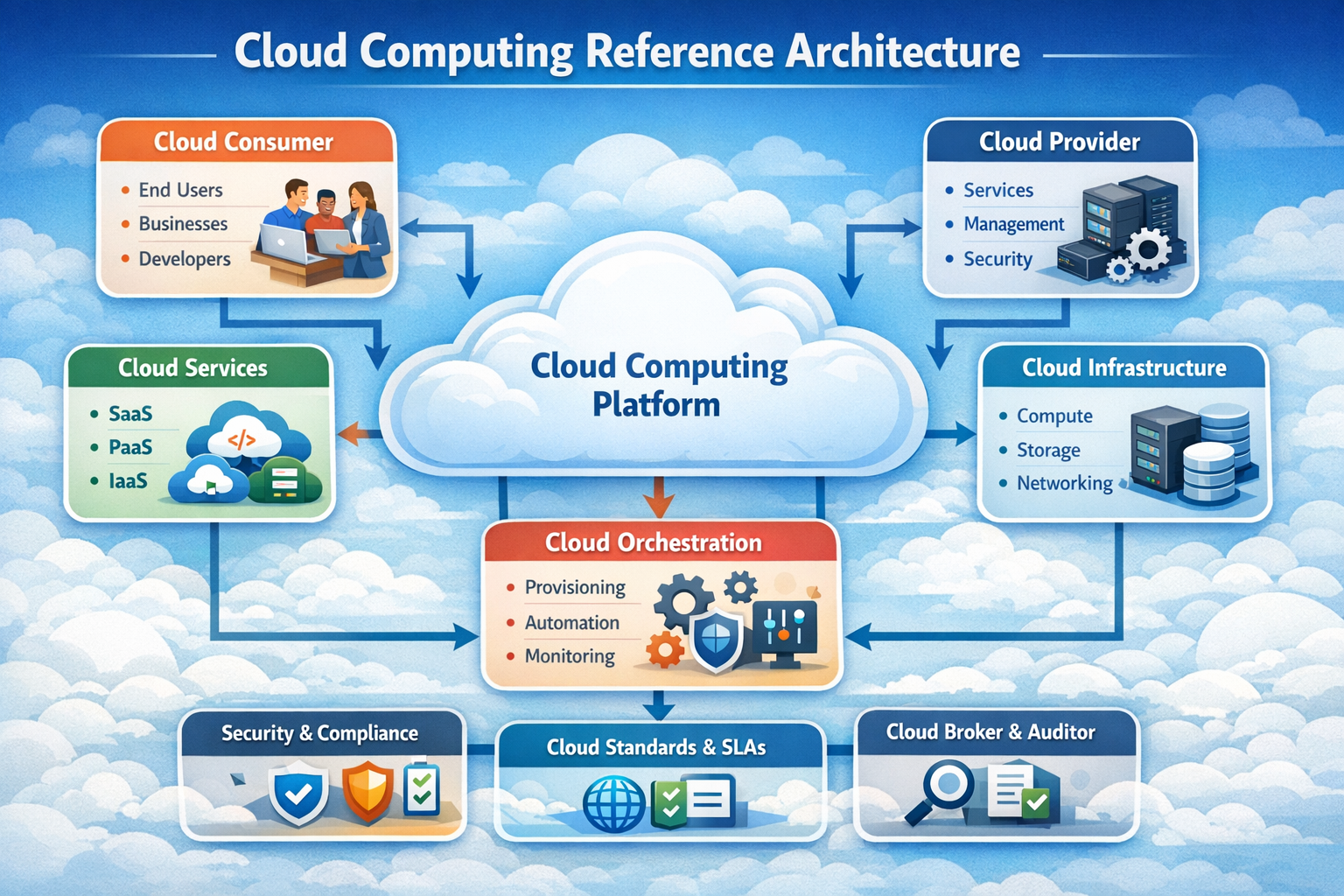
When people ask what is the cloud computing reference architecture, they are usually trying to understand how systems are built and how all parts of the cloud work together. In simple words, cloud computing reference architecture is a clear structure or blueprint that explains how services are designed, delivered, and managed. It shows the big picture of cloud computing instead of focusing on one company or one product.
Think of it like a map. Just as a map helps you understand roads and directions, a helps developers, businesses, and learners understand how cloud computing works step by step. It explains what components exist, how they are connected, and what role each part plays in the cloud environment. This makes learning and planning cloud systems much easier.
is not software and not a tool. It is a guideline. Cloud providers like AWS or Microsoft Azure may use different names for their services, but behind the scenes, they follow the same architectural ideas. This is why learning the reference architecture helps you understand any cloud platform, not just one.
“A reference architecture gives a common language to talk about complex cloud systems.”
Many beginners feel cloud computing is confusing because everything looks hidden. The computing reference architecture removes that confusion by breaking the into simple layers, roles, and services. This is why it is widely used in education, enterprise planning, and cloud security discussions.
Why Cloud Computing Reference Architecture Is Important
Understanding what is the cloud computing reference architecture is important because cloud systems are complex. Many services run together at the same time, such as storage, servers, security, and networks. Without a clear structure, managing these services becomes difficult. provides a standard way to understand how all these parts fit together and work smoothly.
This architecture helps businesses avoid mistakes when moving to the cloud. It improves planning, reduces risks, and supports better security decisions. For learners and beginners, it makes cloud computing easier to understand because everything is explained in a logical and organized way, instead of technical confusion.
Quick Information Table: Why It Matters
| Benefit | Explanation |
|---|---|
| Better Understanding | Makes cloud concepts easy and clear |
| Improved Security | Helps identify where security controls belong |
| Scalability | Supports growth without redesigning systems |
| Cost Control | Helps plan resources efficiently |
Who Defined the Cloud Computing Reference Architecture?
When learning what is the cloud computing reference architecture, it is important to know who created it. The most trusted and widely used cloud reference architecture was defined by NIST (National Institute of Standards and Technology). NIST is a U.S. organization that creates technology standards used around the world.
NIST introduced a cloud computing reference architecture to give everyone a common definition of. This helps cloud providers, developers, and businesses speak the same language. It does not belong to one company, which makes it neutral and reliable for learning and planning cloud systems.
“NIST provides clarity in cloud computing through standard definitions and architecture.”
The NIST cloud computing reference architecture is often used in training, certifications, and enterprise cloud strategies. Even large cloud platforms follow its structure, even if they do not mention it directly.
Main Components of Cloud Computing Reference Architecture
The cloud computing reference architecture is made up of clear components that explain how cloud services are delivered. One key part is the cloud service models, which define what type of service users receive. These models help users choose the right cloud service based on their needs.
Another important component is the deployment model, which explains how and where cloud services are hosted. Together, these components form the foundation of cloud computing and help users understand different cloud options without technical overload.
Quick Information Table: Cloud Service Models
| Service Model | What It Provides |
|---|---|
| IaaS | Virtual servers, storage, networks |
| PaaS | Platform to build and run applications |
| SaaS | Ready-to-use software online |
Key Roles in Cloud Computing Reference Architecture
A major part of understanding what is the cloud computing reference architecture is knowing the different roles involved. These roles explain who does what in a cloud environment. The most common role is the cloud consumer, which is any person or company using cloud services.
Another important role is the cloud provider, which delivers cloud services and manages infrastructure. Other supporting roles include the cloud broker, cloud auditor, and cloud carrier. Each role plays a part in making cloud services reliable, secure, and accessible.
This role-based view helps organizations understand responsibility. For example, security is shared between the provider and the consumer. Knowing these roles avoids confusion and improves trust in cloud systems.
Cloud Computing Reference Architecture Layers
The also explained using layers. Each layer has a specific purpose. The lowest layer is the physical resource layer, which includes servers, storage devices, and networking hardware inside data centers.
Above that is the resource abstraction and control layer, which manages virtualization and resource allocation. On top of everything is the management and security layer, which handles monitoring, access control, and service management. These layers work together to deliver smooth cloud services.
Breaking cloud computing into layers makes it easier to troubleshoot problems, improve performance, and design secure systems without guessing.
Real-World Examples of Cloud Computing Reference Architecture
In real life, major cloud platforms follow the ideas For example, virtual machines represent infrastructure services, development platforms represent platform services, and email or storage apps represent software services.
Businesses also use this architecture when planning cloud migration. A company may move its servers first, then applications, and finally full software systems. This step-by-step approach follows the reference architecture and reduces failure risks.
Case Study Example:
A small business moved to the cloud using reference architecture guidance. By separating infrastructure, applications, and users, it reduced costs and improved system reliability within six months.
Advantages and Limitations of Cloud Computing Reference Architecture
One major advantage of is clarity. It helps everyone understand cloud systems in the same way. It also improves scalability, security planning, and system design.
However, the limitation is that it is a general model, not a ready-made solution. Every business still needs to customize its cloud setup. The reference architecture guides decisions but does not replace real-world design work.
Understanding both benefits and limits helps users apply the architecture wisely.
Frequently Asked Questions (FAQs)
1. What is the cloud computing reference architecture in simple words?
It is a basic structure that explains how cloud systems are designed and how cloud services work together.
2. Who uses cloud computing reference architecture?
Students, developers, businesses, and cloud providers use it to understand and plan cloud systems.
3. Is cloud computing reference architecture a product?
No, it is not a product. It is a guideline or framework.
4. Why is NIST important in cloud computing?
NIST created a trusted and global standard for cloud architecture.
5. Is cloud computing reference architecture hard to learn?
No, when explained in easy words, it becomes simple and logical.
Final Thoughts on What Is the Cloud Computing Reference Architecture
Understanding what is the cloud computing reference architecture helps remove confusion from cloud computing. It explains cloud services in a clear and organized way, making learning and planning easier. Whether you are a beginner, student, or business owner, this knowledge builds a strong foundation for working with the cloud confidently.
Read more: What is Cloud Computing?



Post Comment